01Onychocryptosis
Podology treatmentPODÉA MedicalIngrown toenails
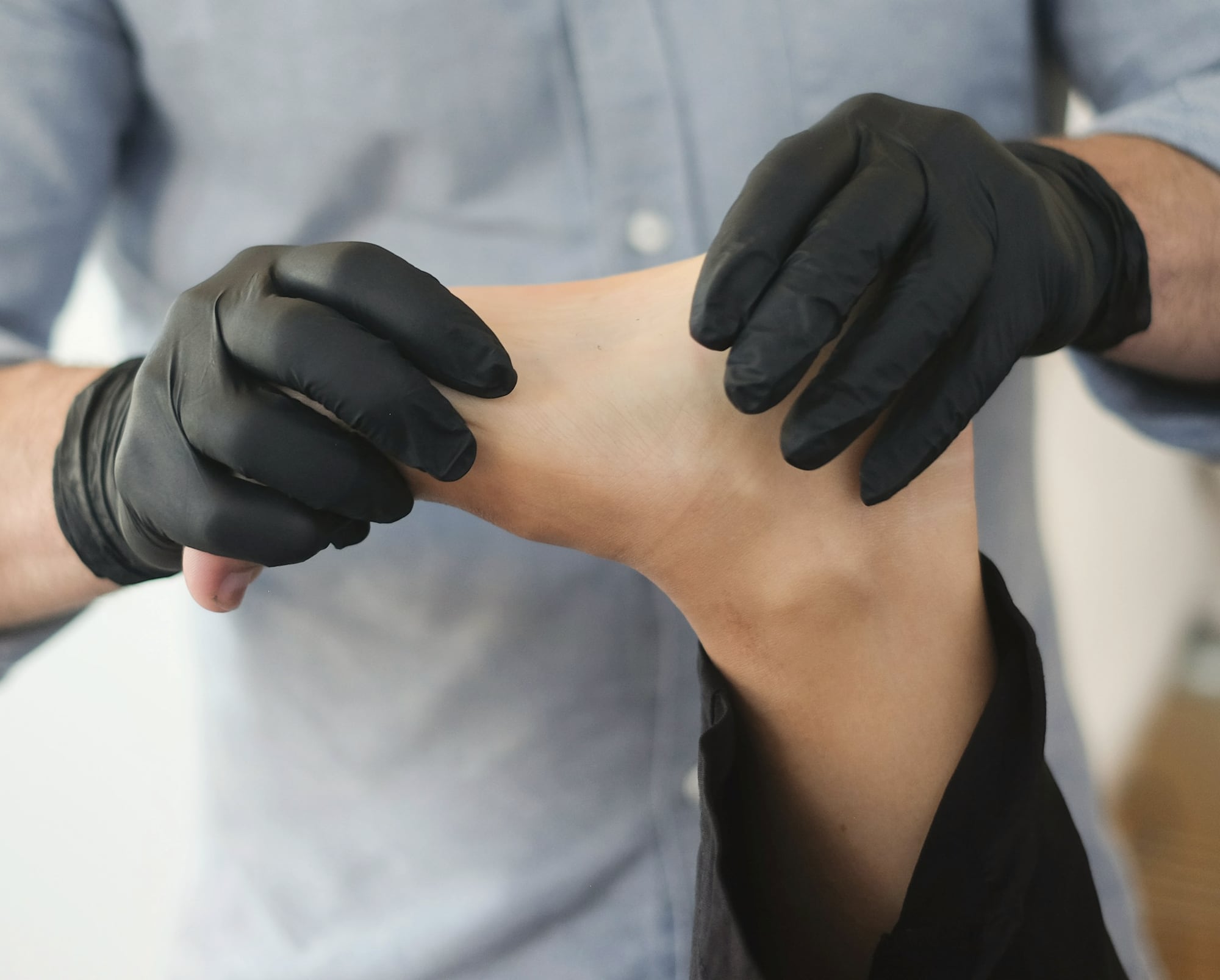
An ingrown toenail happens when the edge of the nail presses into or penetrates the skin at its side. It starts with mild pain and, without care, can progress to inflammation and infection. Many early cases are treated without surgery.
Onychocryptosis
02
Symptoms
- 01Pain at the side of the nail, especially in shoes or when touched
- 02Redness and swelling of the side skin
- 03Warmth in the area
- 04In advanced stages: pus or excess tissue that bleeds easily
03
Causes
- 01Cutting nails too short or rounding the corners
- 02Tight or pointed shoes
- 03Repeated knocks and pressure, for example in sport
- 04An inherited nail shape, curved or wide
- 05Heavy sweating that softens the skin
04
Conservative treatment
In early stages the pressing nail edge is carefully freed, the area is cleaned and a protective material is placed between nail and skin. Pressure drops and the skin can settle.
- 01Careful removal of the part of the nail that presses
- 02Packing and protection of the skin fold
- 03Guidance on correct cutting and footwear
- 04A check-up after a few days
05
Orthonyxia, where appropriate
When a nail keeps growing curved, a corrective brace can guide its growth gradually and lower the risk of recurrence. Suitability is decided after an assessment.
06Medical note
See a doctor without delay if:
- There is pus or redness spreads towards the toe and foot
- Red streaks, fever or feeling unwell appear
- You have diabetes, poor circulation or reduced immunity
- Pain increases quickly or excess tissue bleeds
- The problem keeps returning despite care; surgery may be needed
07Related services
Infections that need antibiotics and surgical procedures are handled by a doctor. We refer you when it is needed.